
Why Bohm Dialogue?
Bohm Dialogue, is a practice, process and philosophy that originates from the work of David Bohm (1917-1992), a theoretical physicist, most known for his theory of the implicate and explicate order.

At Creating Meaning, we are passionate about Bohm Dialogue because of its distinct ability to develop individual and collective agency, and essential communication, thinking and relating skills, by creating a respectful space for freedom of thought, feeling and experience to be shared and acknowledged.
Unlike other Dialogue methods that focus on decision-making and consensus as a result of the process, Bohm Dialogue removes the pressure for agreement or outcomes, enabling the group to surface deeper understanding on the assumptions and biases that often block our ability to listen freely to others, and allowing new thinking and fresh perspectives to emerge.

Who is Bohm Dialogue for?
Bohm Dialogue is a deceptively simple practice. It doesn’t require any particular skills or knowledge to participate, just a willingness to listen deeply to one another. Find out how to work with it and how it benefits people at the individual, community and organisational level.
Bohm Dialogue can be described as a Practice, a Process and a Philosophy

Practice
Bohm Dialogue is an intentional practice of coming together with others, whether as a temporary or a regular group, to inquire into the nature and function of individual and collective human thought.
We can agree that to improve our skills, whether we want to learn a new language, or play an instrument, we need to practice. Committing to a Bohm Dialogue practice, over time, develops essential communication, relating and thinking skills. These include active listening, authentic voicing, emotional, relational and embodied intelligence, critical, creative and systemic thinking and collaboration skills.
Whilst it is a group practice, It is possible to have the spirit of a dialogue practice with oneself, as a continued process of self-inquiry and self-reflection, that requires listening for one’s own assumptions, biases, beliefs and values, suspending judgements and staying curious.

Process
The dialogue itself is practised in a circle: creating an inclusive and non-hierarchical space that fosters belonging, trust and psychological safety.
The process requires deep listening that allows for inquiry into what is important to individuals and the group. Participants are not required to speak unless they feel moved to do so; the group follows the ‘flow of meaning’ that emerges and moments of slowness and silence are welcome.
The process invites participants to become aware of what is happening in the moment, including bodily and emotional awareness, in addition to the process of thought, and any judgements or assumptions that arise.
Dialogue does not require agreement during the process or specific outcomes. However, it does require a willingness to participate with respect, openness and non-judgement.

Philosophy
David Bohm developed a philosophy of dialogue which grew out of his observation that fragmentation is one of the reasons for the many crises we face as a global society. We have become fragmented in ourselves, our organisations and societies.
As a world we are facing a multitude of local, global and shared crises. The status quo is not working and as a result, there is a need to do things differently.
As Bohm’s contemporary, Einstein, famously said, “we cannot solve our problems with the same thinking we used to create it.” This is why Bohm recognised that what we so desperately need is new thinking, and that we struggle to arrive at this new thinking because we do not create the time and space to come together and meet in a meaningful way or create the conditions in which we can allow new thinking, and thus change, to occur.
We have been working with the Bohm Dialogue for 10+ years. Drawing on the work of David Bohm, and other Bohm Dialogue practitioners around the world, we have developed a unique approach that combines our decade of practical experience, with knowledge of other communication, embodiment and creative methods.
We aim to make the practice and it’s transformational potential as accessible as possible to individuals, communities and organisations. To discover more about the value of a Bohm Dialogue practice, read our Case Studies.
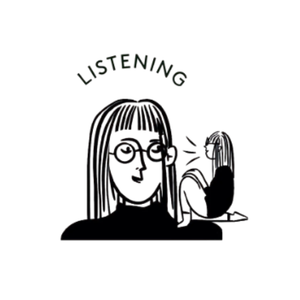
First and foremost it is important for each participant to be able to listen fully and deeply. In dialogue we can become aware of and develop our listening skills, to be able to gain greater understanding of others, ourselves, and the world around us
Key Principles of a Bohm Dialogue Practice

When practising listening, it is the ability to suspend any judgements that may arise and make them available for inquiry, that can lead to the generation of new knowledge. Creating a non-judgemental space for a group requires trust, openness and honesty.

Once we have developed the ability to suspend our initial judgements, we create room to make them available for inquiry. By exploring and challenging different perspectives we can begin to see the patterns that create our thoughts, and in turn, opportunities for new thinking together.
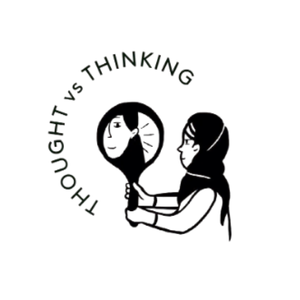
In Bohm Dialogue, thought is seen as the product of past thinking - our memories, learned behaviour and thought patterns. Thinking is a fresh response to any given situation - the ability to consider new ideas and fresh perspectives.

Dialogue is something creative. By cultivating curiosity towards our personal and shared experiences and assumptions we are able to create new thinking together. Dialogue harnesses the power of our natural creativity, empowering the group.

For a dialogue to be successful, participants will benefit from understanding the principles of dialogue and the values of the practice - respect, compassion, understanding, listening, awareness. A values-based approach ensures a strong foundation for the process and participant experience.
Frequently Asked Questions
-
David Bohm spent days in dialogue! We appreciate you might not have that much time so we can offer an introductory dialogue session of 2 hours. This includes an introduction to the process, particpants check-in, a short guided mindfulness practice and check-out. A themed dialogue takes 3 hours and additionally includes simple individual and small group framing exercises. The first half of the session is designed to allow people to deepen their thinking, practice listening skills and feel present. The dialogue itself can be 45 - 90 minutes. It is also possible to host longer dialogues e.g. one day workshops, incorporating other activities tailored to your needs and interests. The full benefit of Dialogue comes with a commitment to practice over time.
-
It is essential that the room used allows for a circle of chairs with no tables within the circle. The circle creates a container for the process, and allows participants to embody the value of inclusion, and acknowledge that it is a non-hierarchical process and space. The circle allows all participants to see each other, and be seen, and supports the active listening and mutual respect of the group. Whilst it is possible to host ourdoor dialogues, these needs to be carefully considered to ensure the group feels held, and external distractions are minimised.
-
A dialogue group can range from 5 - 25 participants. Ideally the group represents a ‘micrcosom of culture,’ that includes a diversity of experiences and perspectives.
-
Dialogue is an intentional, facilitated and values-based communication practice that takes place seated in a circle. It is a practice for creating meaning, new perspectives and new thinking, and ultimately, change. It takes commitment to participate, active listening, a willingness to ‘not know’ everything, and the ability to view different perspectives as an opportunity for learning and growth. The invitation during a dialogue is to ‘speak to the centre’ and apply the three modes of listening in a dialogue - to yourself, others and the group.
-
Whilst the dialogue process does not dictate a specific outcome it is important to acknowledge why we need spaces for deep listening. In some instances, simply being able to speak our thoughts and feelings out loud, and experience the wisdom present by listening to the group is enough. In other contexts, such as organisations or community groups, it is important to recognise a distinction between being listened to, and being heard. Dialogue isn't about decision making or problem solving during the process itself. However, after the dialogue, those with decision making power can actively acknowledge, integrate and respond based on what they have heard and understood. If leadership does not move from listening into action after a dialogue, they run the risk of creating a sense of frustration and even mistrust amongst those in the dialogue. Dialogue cannot be stand-alone – it is part of a process that embraces the values of inclusiveness, listening, and of being brave enough to hear what is being said.
-
Great! Visit our events page, under ‘Resources’ to find out about our in-person and online public events. Not UK based? Visit https://dialogue.directory/ to find out if there is a Bohm Dialogue group near you.
-
Great! Either get in touch with us via our contact form or book a call by clicking on the button at the top of our website. We are available to discuss all aspects of the Bohm Dialogue practice and how it can help meet your needs.