
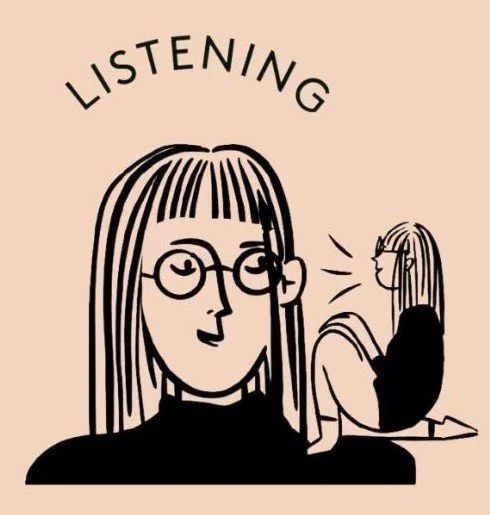
85% of what we know, we have learned through listening*
Listening is a foundational value, skill and practice. We all possess the capacity to listen but that capacity remains largely untapped as few of us have learned to truly cultivate it. Research suggests that a scarce two percent of people are effectively skilled in active listening despite the fact that listening is as essential as speaking. Not only does it allow us to detect areas where our knowledge is incomplete, and to surface important questions for co-enquiry, but also to strengthen trust and healthy relationships.
In this four-part online learning journey we explore and practice the three modes of listening in a Bohm Dialogue practice - how we listen to ourselves, how we listen to others, and how we listen to the world around us. This learning journey is for anyone that wants to improve how they communicate and relate and develop listening skills that can be applied in both personal and professional contexts. It can be delivered online or in-person.
Session 1 - Listening to self
Session 2 - Listening to others
Session 3 - Listening to the group
Session 4 - Group dialogue
We will co-inquire into different aspects essential for listening well and improving listening skills, including
Intention - Get clear on the intentions we bring when we prepare ourselves to listen to someone.
Need or purpose - Explore the qualities of listening and response required by the person we are listening to.
Conditions - Identify what conditions enable or prevent us from listening well.
Whole-body listening - Understand how our emotions impact our thoughts and feelings, often creating habitual ways of listening and thinking.
Judgements & Assumptions - Learn to suspend judgement, in order to listen beyond labels and preconceptions and acknowledge assumptions and biases.
Curiosity - Cultivate the qualities of openness and receptivity that support non-judgement and the practice of co-inquiry.
Critical, creative and systemic thinking - Improve thinking skills by listening to understand and value diverse perspectives and increase self-awareness.
Further resources
3 modes of listening in a dialogue, explainer video
3 modes of listening in a dialogue, blog
Listening and Bohm dialogue, blog
Bohm Dialogue and the Body, video podcast
*Active Listening Statistics, resource