UK Values Alliance Dialogue - Dialogue & The World

‘Dialogue requires the principle of participation-by creating a common mind we are able to recall ways in which we are an intimate part of the world around us.’

In this third dialogue in the UK Values Alliance series we set out to explore values and how they influence our relationship with the world around us.

We chose to frame the dialogue with consideration of five core values that participants would like to see lived out in their societies. This was followed by discussion in pairs, on the values chosen, in comparison to the below 'British Values.' These five values were set out by the government in 2011 and have been promoted and embedded in British schools since November 2014. 

Source: http://vle.newbury-college.ac.uk/mod/forum/discuss.php?d=2175

Source: http://vle.newbury-college.ac.uk/mod/forum/discuss.php?d=2175

What became immediately clear as we began the dialogue is that the framing exercises provoked quite different reactions in the participants; some reflecting that to just pick five values that one would like to see lived out was nonsensical as it cannot be limited to five alone; some stating that the 'British Values' were not values, but rather systems or processes; some finding familiarity in the British Values due to working with them in schools, and being able to relate their chosen values to the language of the British Values. These different and somewhat negative reactions showed us three things: one that the language hugely influences how we connect or are disconnected to ideas or messages, two: that without that connection we often stay stuck in a head-based, discussion, that inhibits our ability to listen and create meaning together by reaching a deeper level of understanding, and three: that it is not possible to impose values on others in a way that allows them to be felt and lived from a place of authenticity and personal truth. 

Removing the British Values from the focus of the discussion allowed us to progress to a deeper level of dialogue, whilst reflecting on the reactions and thinking that had arisen.

The realisation that it is not possible to impose values led to some discussion on how it is that we discover and form our values, and the dynamic nature of values; it being possible to acquire new values when influenced by new contexts or cultures, or to prioritise certain values over others depending on the situations we find ourselves in. One participant reflected on the distinction between operational values that drive day-to-day behaviour and idealistic values that might help him aspire to and become to the 'next best version of myself,' and asked how we could support the tension between 'who I am today and who I could be tomorrow.' The ability to see ourselves and our values as dynamic and evolving allows us to face challenging situations or people with compassion and create the space and conditions for change. 

This need for flow and the conditions to discover and connect with our values is an important point. Once values become institutionalised or collectively held, the danger is that they can become a rule that is rigidly held. Whilst we need support and guidance, we also need the space to take responsibility for our own values and how we live them. As one participant suggested, if we stay in a parent-child-like relationship to create our values then we risk the child-like reaction of rebellion. 

The question of how do we create the conditions for people to connect with their values and change was explored through the idea of community, family and leadership. If we agree that we cannot impose values then how can we come together to share values? It is only in coming together in situations like dialogue or meaningful interaction in other ways that this can be done, which requires the time and willing participation of individuals. If we are to aspire to any sense of community or societal values then it is important that those promoting them are also able to model this behaviour back.

The question of whether 'bad people' have values arose in the dialogue and it was suggested by some that it is not a case of judging people as 'good' or 'bad' but instead meeting them with understanding, empathy and compassion. When we become focused on the lack of values in others, we can also lose touch with our ability to respond from a place of our own personal values. If we want others to change we need to ask ourselves whether they are likely to do so when met with judgement and blame or with love and understanding. 

Values are in reality all defined by how you interact with other people and they way you behave in the world.

It is clear that when considering the relationship between values and the world there is a constant interplay between the internal and external, between the individual and the society in which they live. Often to live our values we have to overcome fears, develop strategies to get our needs met, raise our consciousness, remember that we are constantly evolving, extend the values we aspire to treat others with also to ourselves, and create humanised environments where we can align values with systems and processes in a meaningful way. Connecting with each other and our values can take us beyond polarisation, beyond judgement, to a place of common humanity. 

Identify what your individual values are, and then live them, and create the world that you want to see.

 

Rewilding at Knepp

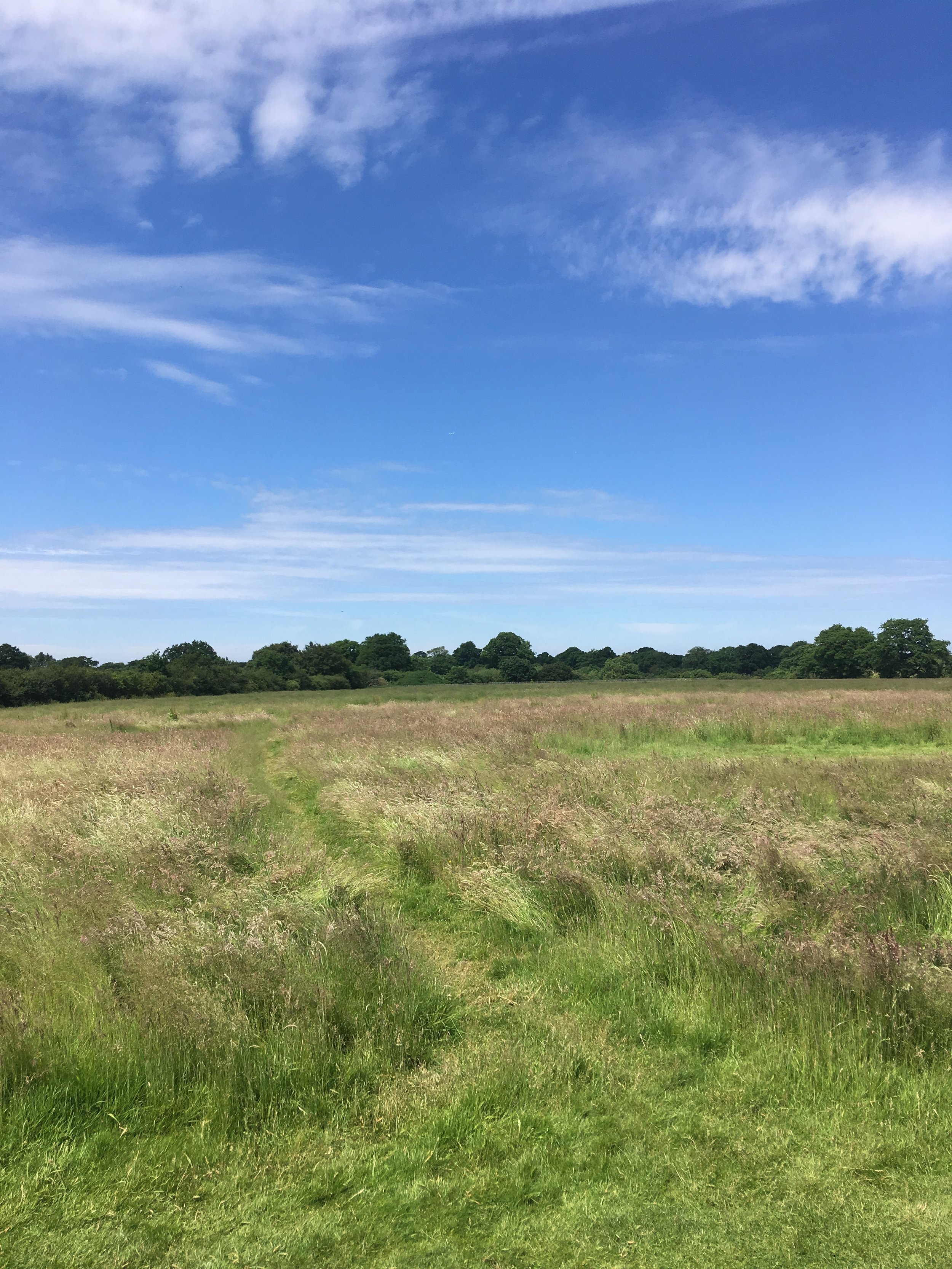
This month I found some time to spend four peaceful days with Mother Nature and no technology at Knepp, one of the largest rewilding projects in lowland Europe.

Our ecosystems are broken and nature is struggling – with 56% of species in the UK in decline and 15% threatened with extinction. Biodiversity needs space to flourish.

Across Britain, many places where you would expect wildlife to thrive have been reduced to wet deserts. The seabed has been smashed and stripped of its living creatures. We’ve suffered more deforestation and lost more of our large mammals than any European country except Ireland.

We can’t build natural processes but we can help them re-assert themselves. For example, by reducing high populations of grazing animals to help natural woodlands grow. Or by reintroducing missing species to plug crucial gaps in the ecosystem. Or by letting rivers meander and follow their natural paths.

We need nature. We desperately need nature in Britain to recover

Source: www.rewildingbritain.org.uk

IMG_6964.JPG
IMG_6952.JPG

By far the best introduction to this inspiring project is to watch their short video that explains how they made the transition from intensive farming to extensive farming and giving their 3,500 acre estate back to nature, and in doing so, gave a gift to us all.

This was my first solo camping trip, and whilst I was at a camp site with other people, I felt in relative solitude in comparison to my normal day-to-day life. To further this feeling of solitude, I turned off my phone on arrival on Friday morning, and left it off until Monday lunchtime. Without a watch, turning my phone off also meant I disconnected from what I came to refer to as my 'time-telling device' in my journal writings. Losing this connection to time as we are accustomed to it in the modern world, was probably the most notable difference in my weekend experience. I did not miss other features of my phone: emails, calls, social media, entertainment; but it did feel strange to not know what time it was. I trusted that I could have a good guess by looking at the position of the sun, and other than that I had to settle into just 'being.' After some restlessness I began to adjust to my new way of being and started to really take notice of my surroundings and experience.

notice (n.)
early 15c., “information, intelligence,” from Middle French notice (14c.)

My mind is trying to tell me to do something
My body wants to be still
My energy is the go-between
The channel of confusion
Between doing and being
Being and doing
The chatter that I am trying to silence
The feelings that I am trying to let go of
Maybe I should stop trying

To stop trying
Is not to give up
Or give in
It is to flow
To attune
To notice
And know when to do
This is not the time for doing
I don't need my time telling device
To know that
Nothing is also
Everything
 

One of my favourite things about Knepp are the majestic oak trees, surveyors of the land for hundreds of years, you can feel their wisdom in their wide trunks. There are a number of viewing platforms that have been considerately built on some of these trees to give better views of the landscape. I found myself in ceremony with some of these trees; walking around them, meditating with them and feeling a sense of pain and mourning for all the destruction that they have borne witness to.

Another joy I found was the act of lighting my fire and cooking in the outdoors. It conjured up images of primitive times, and after my restless first afternoon, I found cooking my first meal grounded and settled me into my sense of place. The ritual act of lighting the fire to cook, gave a rhythm to my days that I looked forward to.
Another blissful experience was the treat of having an open-air bath! Knepp has created a little bit of rustic luxury with outdoor baths and showers, where I discovered that there is not much that can compete with lying in a warm bath on a summer's evening, looking at the blue sky, vibrant green leaves of the trees and listening to the birds sing.

This is truly an inspirational place. It has been beautifully and thoughtfully created for visitors to relax and spend a peaceful and blissful time in nature. There is a map of the estate with four walking trails that are easy to follow and take you through different areas; from the shade of woodland, to meadows, rivers and ponds, and shrubland. It is unlike any other area of nature I have seen in my own country; the wildness reminded me of other parts of the world I have visited such as Sri Lanka, where nature is allowed to run her course, and humans live more in harmony with the land. 

IMG_6969.JPG
 
Meditation with an Oak Tree

We breathe together
In a cycle of breath

We breathe together
I feel it now
The solid trunk
The rustling leaves
In a cycle of breath
Life and death

We breath together
My exhale is
Your inhale
The wind blows
And we both know
In a cycle of breath
The web of life
Weaves it’s net

We breathe together
Life giving life
The energy of creation
Is wet between my legs
Giving back to
The Earth that made me
In a cycle of breath
Brings renewal
Life and death


‘Connectivity’ is very important to us. Nationwide, and across Europe too, ecologists are concerned about the isolation of habitats. In order to protect biodiversity and and populations as a whole, species need to be able to move from one area to another if they are going to be able to respond to adverse factors such as pollution and climate change.
 
The Knepp Rewilding Project aims to demonstrate how areas of high biodiversity can influence the countryside in general, stimulating species expansion and colonisation in other areas. We see Knepp as a much larger picture, where diversity hotspots can be linked with larger areas, creating what ecologists call a ‘Living Landscape.’
 
Grazing animals are the prime ‘movers’ of regeneration. The breeds of animals we have at Knepp longhorn cattle, fallow, roe and red deer, Exmoor ponies and Tamworth pigs-imitate the herbivores that would have grazed this land thousands of years ago. The various species affect the vegetation in different ways helping create a mosaic of habitats such as open grassland, regenerating scrub, open-grown trees and woodland.
IMG_6968.JPG

As stated on the Rewilding Britain website, rewilding is about wildlife returning and habitats expanding; people reconnecting with the wonder of nature and communities flourishing with new opportunities. Knepp meets these three aims, and any visitor will experience the wonder of nature. I am very grateful for being able to spend time in this magical place; from the birds singing, to the majestic oak trees, ancient paths and wild animals, it was a lesson in slowing down, noticing and appreciating. 

 
IMG_6901.JPG
 

"The sustainability of the environment we live in is the ground of our sense of worth...A psychology of liberation must also be a psychology of ecology. The environment tells the body how much our lives are valued." - Truth or Dare, Starhawk

The 3 ways we listen in dialogue

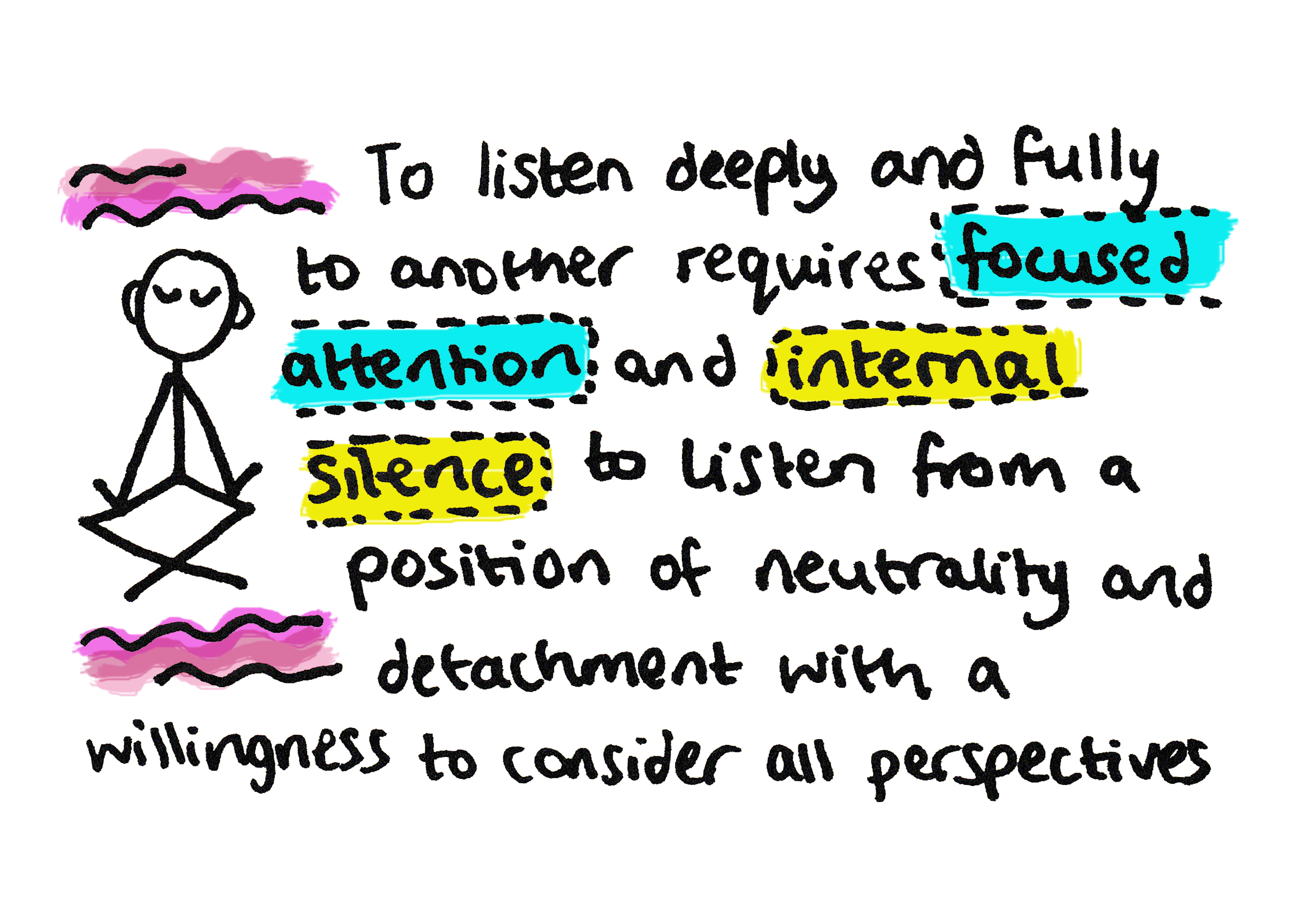
In dialogue we are practising listening three ways, which can seem quite hard at first, but with awareness and practice becomes possible.

 
8.jpg
 

Listening to Self

Firstly we need to tune into and listen to ourselves. This includes sensing any emotional responses to what is said in our bodies; Our emotions are felt before they are thought and it is often something that is overlooked. Our bodies give us the first sign of how we feel about something; do we have a tight nervous sensation in our stomachs, do we feel nauseous, has our heart started beating faster, do we feel tense? Once we begin to notice these physical sensations we can start to learn the language of feelings to name them. This takes some practice; sometimes we don’t feel anything. We can use our breath to connect us to our bodies, searching within for subtle signs and exploring them. Perhaps what we thought was anger is actually pain. Don’t forget that it is also possible to conjure up emotional sensations by recalling past experiences and feelings so, whilst it is important that we notice these too, we can bring awareness to whether it is something felt in the present moment or a consequence of some past thought or feeling.

Once we have become more in tune with our emotional and physical responses we can bring our attention to our minds. Can we inquire into why it might be that what is being said or happening right now is causing these sensations. Can we trace our thinking back to similar past events or words. Or bring understanding to past experiences that may have developed certain learnt behaviour or habitual thought patterns. What is the tone of the voice inside our heads? Is it our inner critic putting us down or a more compassionate, kind and understanding voice. Often we don’t notice our inner narrative; there are many voices in there, as there are many facets to ourselves. It can be helpful to name them and make friends with them; you don’t need to cast your self-doubt aside but perhaps give him or her a hug. Once we give light to all the elements of ourselves we can better see what lessons they have to teach us, or what needs they might have to become a better version of themselves.

 
6.jpg
 

Learning to listen to ourselves can be one of the hardest elements of a listening practice; sometimes we don’t want to listen to the chatter in our heads; we find constant distractions to keep us from those voices; the what ifs, the buts, and the if onlys. We don’t need to tackle them all at once, you are on a lifelong journey, and one that is flowing in constant change, so be gentle and take steps towards knowing yourself a bit better each day. There are many ways to explore ourselves but noticing is a good start. Notice what makes you happy, what makes you feel most alive, or what makes you sad or angry. All feelings are welcome, and are in direct relation to our needs, whether they are met or unmet needs. Learn to pause, take time and reflect. Notice what you are feeling moment to moment; emotions are fleeting so give them space and as you come to observe them they will start to change: no one can stay angry forever, and we all know happiness is fleeting. All emotions are an expression of life, so we don’t need to judge them as good or bad, just accept that they are there, and learn to be with them. If we don’t allow the flow of emotions they will find somewhere to settle in our bodies, festering, ready to surface at the most inopportune moments, where we still might not understand them.

Listening to others

When we think about listening to others there are a few things to consider first. What is our intention for listening? This might sound strange but actually why is it that you want to listen to this person? Do you even want to listen to this person? Do you think they have something of value to say? Do you need something from them? Do you think they should be listening to you but you don’t need to listen to them? Or do you simply want to honour and respect them as a fellow human being and listen with the intent to understand and connect with them. Once we have given some thought to our personal intention we also need to give thought to what the person or group we are listening to needs. Do they just need to make sense of their own thoughts by speaking them out loud. People speaking their problems do not always need a answer, advice or solution from us, in fact, sometimes that is the least helpful thing we can offer them. Maybe they just need the silent acceptance of another human being to hear them and see them for who they are and what they are experiencing in the moment. This of course requires that we are able to suspend our judgement of whatever it is that person is saying, so that they feel open and secure to really speak what is true to them.

 
5.jpg
 

Practising non-judgement is an essential part of listening to understand, both for ourselves, as we are often our harshest critics, but also for other people. If you have ever been listened to fully, without judgement, you will know that it is a beautiful, liberating feeling. Listening without judgement does not mean that we will never get to a point that we make a judgement, but it means that we are able to hold that judgement lightly, and really inquire into what is being said, with curiosity and empathy. There is a dance that plays between us when we speak; someone says something we don’t like and we feel our defences raising, ready to jump into action; to attack or defend. Can we stop to notice and inquire into what has caused this reaction? Or perhaps what the person is saying has got us all excited, we can’t wait to jump in, interrupt and say our part. Either way, it is essential that we practice a slow form of communication; one that gives spaces for these feelings to settle and the causes to emerge, to strengthen our understanding of ourselves within the context. There are of course other reasons why someone may need us to listen to them. Perhaps they do indeed need something from us, maybe they need us to mirror back to them what it is we have heard; so they can feel listened to and understood. Or maybe we have some vital knowledge that they need, in which case, have we given them enough time and space to ask the vital questions. Are we delivering knowledge or are we exchanging it? It is also important that we take into considerations the conditions in which we listen, both in ourselves and our environments. Do we listen well when we are stressed, hungry or in a rush? Do we listen well in a noisy room full of distractions? Can we make an assessment on how these might affect the levels of listening required and suggest we move to a different location or speak at another time.

Listening to the group

Finally there is listening to the group. This means listening to the flow of meaning that is emerging from our collectives voices and thinking. When we are in a successful dialogue, this flows naturally from one voice to another, building or reflecting on what is being said until we start to build a picture of what the group thinks and feels on a particular topic. As each voice, experience and insight is added, we start to see things with fresh eyes and new perspectives. We start to transform. When we are speaking and listening to the group there is no real need to speak at or to one another, because we are speaking together, speaking to the meaning that is forming at the centre of the circle. A collective intelligence begins to form in the circle, and it is this intelligence that can give us insight and understanding to complex problems, can answer questions that seemingly had no answers, and can provide direction for taking next steps.

 
7.jpg
 

That is not to say that when communicating together this way we will not experience or feel disturbance. What is being said may create emotions that conflict with our feelings and beliefs. It is important in a dialogue to accept that our opinions and beliefs are assumptions, based on our experiences, and that we each have a unique set of experiences that have shaped us. There is value in all our experiences if we can share them with the spirit of fellowship and trust. We can learn to live with our differences because we have come together in our humanness. We can discover understanding, where previously there may have been anger, indifference or frustration. We begin to realise what is lost when we lead from the instant judgements of someone; that person doesn’t look like me, doesn’t sound like me; couldn’t possibly relate to me. What we gain from communicating with each other in this way is a feeling of connection and a sense of what it means to be truly human. We don’t necessarily all have to be convinced to have the same view but we can come to a coherence and shared meaning of our collective views.We are a reflection of Mother Nature; with the vastness of her diversity, we are also diverse in our beliefs, likes, dislikes, cultures. Mother Nature is an ecosystem-each plant and animal has their role to play to maintain balance and harmony. So when listening as a group we can take inspiration from Mother Nature, tune into our intuition, listen deeply from our bodies, hearts and minds and allow our collective intelligence to emerge from the centre.

 
11.jpg